 IntegraFarm
Mix-Max: the right ration, to the right pen, on real data
Mix-Max is IntegraFarm's mixer and feeding module. With Superbridge it connects your mixers' in-vehicle computers directly to the system, so the ration that was truly made and delivered — not just the one planned — is recorded.
“Less effort, higher precision, greater yield.”
The right feed, to the right animal, in the right amount, at the right time
Bunk management matters as much as ration optimization — it's one of the biggest levers of loss or gain in livestock. A correctly running feeding system prevents wrong feeding and can lift yield by up to 15%.

The right ration for the right animal: tune it to need, or you lose money
A herd is never uniform, yet on most farms the ration is. On a single day a feedlot holds groups with completely different needs at once: a freshly arrived calf and a steer three days from slaughter, a heifer and a sick animal, a hormone-free-program animal and a long-fed premium animal. Each one needs a different energy density, a different roughage ratio and different additives.
At industrial scale, best practice is to feed every group its own ration. In a large operation the rations that should go out in a single day can reach 10–15:
| Animal group | Ration |
|---|---|
| New arrival / receiving | Receiving / Starter |
| Adaptation steps 1–4 | Step-up 1, 2, 3, 4 |
| Finishing (steer) | Finisher (Steer) |
| Finishing (heifer) | Finisher (Heifer) |
| Sick / recovering | Hospital ration |
| Bad weather | Storm ration |
| Hormone-free program | Natural Finisher |
| Growing 1 | Grower 1 |
| Growing 2 | Grower 2 |
| Long-fed / premium | Long-fed Finisher |
In reality, operational difficulty squeezes most operations down to 3–5 rations.
Managing 10–15 rations by hand is hard: tracking which formula goes to which pen, loading the feed truck correctly, matching the called weight with the amount actually loaded, reading consumption, timing the transition days. Under that load an operation drops to 3–5 “average” rations in practice — and that average ration feeds no group correctly.
One average ration, the wrong animal
Freshly arrived calf
Eats a ration too high in energy for it: risk of acidosis and digestive upset, expensive grain wasted, added health cost.
Steer in finishing
Eats a ration lower in energy than it needs: poor daily gain, longer days on feed, feed and yardage cost piling up every extra day.
Heifer
Fed on the steer ration: its different additive and energy needs go unmet and yield drifts off target.
Sick animal
Eats the same ration as healthy animals: recovery is delayed and the loss grows.
So every group is fed either too little (lost gain, longer feeding) or too much (wasted expensive feed, acidosis risk). Both eat straight into the margin.
Feed is the largest line in fattening cost. Most of the cost of one kg of gain is feed, so wrong feeding is not a small detail: over-feeding spends your most expensive input on an animal that can't turn it into meat, while under-feeding makes you pay for unearned gain and extra days on feed. Keeping rations at 3–5 is not about lowering cost; it is about operational difficulty — but the bill comes back exactly as cost.
Manage 10–15 rations with the system, not by hand
IntegraFarm makes correct feeding operationally feasible:
- Pen-level ration assignment: each pen is bound to its own ration by the animals' sex, days on feed, health and program status.
- Automatic load instructions to the feed truck: which formula, to which pen, in what amount — the wrong ration is prevented from reaching the wrong pen.
- Called vs actual weight tracking: loaded and delivered amounts are reconciled and any deviation is seen instantly.
- Bunk reading: each pen's consumption is tracked and dry matter is adjusted.
- Automatic step-up timing: adaptation steps are planned day by day, so no group falls behind.
The operational load disappears; the operation no longer has to squeeze into 3–5 rations. Every group gets its own ration — neither too little nor too much. The margin stays in the herd.
From bunk control to route optimization
Bunk Manager
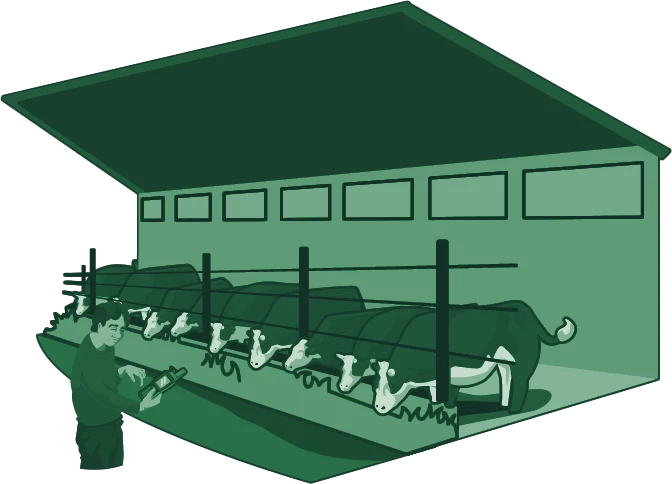
With a two-button handheld and an RFID reader, the controller logs each pen's feed consumption. The system detects changes and needs, then prepares reports for the feed manager to plan optimal distribution.
Mixer Resource Management
The system analyzes animal combinations across all pens and the feed they need, computes how much of each ration to prepare, then builds packages and assigns an optimal route to each mixer by capacity.
Mix-Max Composer
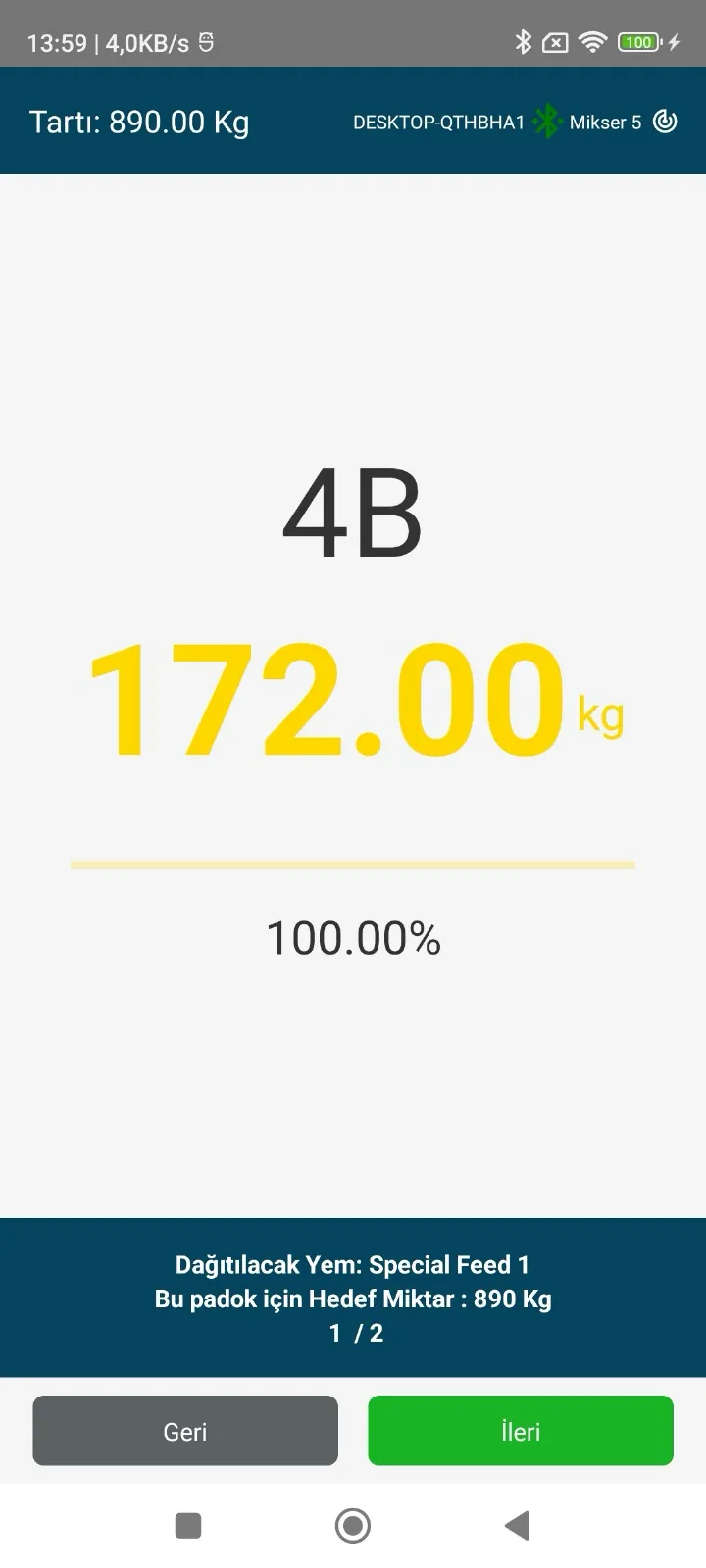
On the in-vehicle screen the operator sees which ration and how much of each ingredient to load. Weight from the mixer scale records the actual amount — capturing the true composition, not the plan.
Mix-Max Distributor
The operator sees which pens get how much. RFID readers on the vehicle and pen tags identify each pen with no operator input, and the actual amount delivered to each pen is recorded.
Route Optimizer
Especially on large farms, a route is drawn per mixer using capacity, rations and the feed plan — finishing feeding in the shortest path, with standardization and less wasted fuel.
Animal-Specific Feeding
Beyond breed-based feeding, feed by animal type — weight, days on feed, breed and sex. The system homogenizes pens at each weighing so each group is fed the ration closest to its real needs.
Ration Manager
Define rations for fattening or lactation periods; change contents by availability and price while keeping the same ration name. For period changes, gradual step-up/transition rations are defined to reduce digestive upsets. The system logs every change and uses it in cost and DM calculations.
Feed Stock Management
Forecast stock run-out, record order/scale-based intake, manage feed transfers and silage/prebatch, and deduct stock by FIFO/LIFO (physical FIFO recommended for forage/silage) with full supplier traceability.
Production Module
Beyond mixing, the system produces and stores silages, premixes and packed mixed rations — and lets you add these mixtures into other rations. Multi-warehouse inventory records receiving, storage, transfers and production stock.
Your mixers, integrated with the software
Superbridge connects the in-vehicle computers on your mixers directly to IntegraFarm. The operator works from system-issued recipes and routes; the actual weight from the mixer scale flows back instantly.
- See the ration truly made, and any errors, from the system
- Optional RFID identifies feeds, silos and pens automatically
- Performance analysis on real data, not samples


Mix-Max sub-modules
A summary above; the full picture here. Open each module to see what it does on the farm.
Bunk checks are done with a handheld and each pen's feed consumption is recorded. Bunk management is one of the biggest sources of loss or gain in livestock, as important as ration design itself.
With the bunk system loaded on the handheld, the feed controller logs consumption on periodic rounds, letting the system optimize distribution. Two buttons and an RFID reader identify the pen automatically and record what the animals ate; the system flags changes and needs and reports them, so the feed manager can plan the most accurate distribution.
Needs assessment: The system determines the animal combinations across the farm and pens from recorded data, then calculates which ration and how much to prepare from predefined protocols and total head and characteristics.
Assignment: It builds packages by the available mixers and their capacities and proposes assignments to the feed manager, who approves or adjusts them; each mixer gets a distribution route and a mixing package so distribution runs efficiently and fast.
The recipe appears on the in-vehicle computer; the operator sees which feed to load and how much. With RFID tags the feed is identified automatically and the amount actually loaded is recorded.
Guidance: When the operator boards, the screen shows which ration to build, which feeds it contains and how much to take by mixer capacity.
RFID integration: An in-vehicle reader and tags on stores or silos identify the feed and capture the real amounts.
The best route is sent to the mixer automatically. Pens are identified by their tags and the right amount of feed is delivered to each.
Operator management: Operators see, on the in-vehicle computer, which pens get how much.
Automatic data capture: During distribution, the weight read from the mixer records the real amount delivered to each pen, so performance analysis runs on real data. An in-vehicle RFID reader and pen tags reliably identify each pen, with no operator intervention.
Especially on large farms, a route is drawn for each mixer taking capacity, rations and the feeding plan into account, and distribution follows it.
Benefit: Feeding finishes in the shortest time with the least distance travelled; every feeding is done to a set standard, and route optimization prevents unnecessary fuel use.
The feed manager builds the feeding plan from pen-check data and assigns it to the mixers as a work order.
Optimization: To propose the most optimum plan, the system uses data from the ration-recipe module, the bunk system, mixer capacities and status, pen animal-type combinations and head counts.
Flexibility and dynamic feeding: The manager applies the plan as is or changes any element for cases the system cannot judge. This enables dynamic feeding at a precision impossible by hand, with high standardization.
Identification: Animal types are set automatically from weight, days on feed, breed and sex and recorded at registration. Special programs by type and period drive automatic planning.
Grouping: At each weighing, pens are homogenized as far as grouping protocols allow. For mixed pens, IntegraFarm calculates the dominant types and their periods and decides which feed goes to which pen, sending this to the feeding module.
Result: The right feed, to the right animals, in the right periods, at an accuracy that is hard to reach by hand.
Animal-specific ration recipes: Rations specific to the fattening or lactation period are defined. Contents can change over time by feed availability and price; instead of a new ration, the same period's content is edited.
Automatic calculation and analysis: The system records changes, accounts for content by distribution time and uses cost, dry-matter ratio and distribution amount in its calculations. Reports let you trace ration changes retrospectively.
Forecast: The system calculates feeds in stock and their consumption rates, giving a forecast of stock status and when it will run out. Planning purchases accordingly keeps feed fresh at the optimum stock level.
Stock entries: Entries are made by order and weighbridge, recording both ordered and actually delivered amounts. The system stores reported and device-captured real data, ensuring the most accurate analysis.
Transfer, silage and pre-batch: Feeds and rations move between locations with request, approval and dispatch records. Silage and pre-batch are recorded by content and amount and traced retrospectively. All stocks can be reported and consumed, with FIFO or LIFO if desired.
Related modules: Integration (Superbridge) · Performance & Reporting
Turn feeding into your biggest gain
A well-run feeding system can lift yield by up to 15%. We'll show you Mix-Max in a tailored demo.
Request a demo